Festivals of India
Learning Objectives
- I can explain what a festival is and why we celebrate festivals.
- I can name the three national festivals of India and their dates.
- I can describe important religious festivals celebrated across India.
- I can explain what harvest festivals are and name examples from different states.
- I can describe how festivals bring people together.
- I can tell about the special food, clothes, and decorations of different festivals.
What Are Festivals?
A festival is a special day or time when people come together to celebrate with joy and happiness. Festivals are an important part of our life and culture.
India is called the "Land of Festivals" because we celebrate so many festivals throughout the year! People of different religions, states, and communities have their own special festivals.
During festivals, we wear new clothes, eat delicious food, decorate our homes, meet family and friends, and share love and happiness with everyone.
Why Do We Celebrate Festivals?
- To remember important events in history (like our freedom struggle).
- To honour great leaders and their teachings.
- To celebrate the victory of good over evil.
- To thank God and nature for good harvests and food.
- To bring family and friends together.
- To keep our culture and traditions alive.
- To spread love, joy, and togetherness in society.
National Festivals of India
National festivals are celebrated by all Indians, no matter what religion or state they belong to. These festivals remind us of our country's history and great leaders.
| Festival | Date | Why We Celebrate | How We Celebrate |
|---|---|---|---|
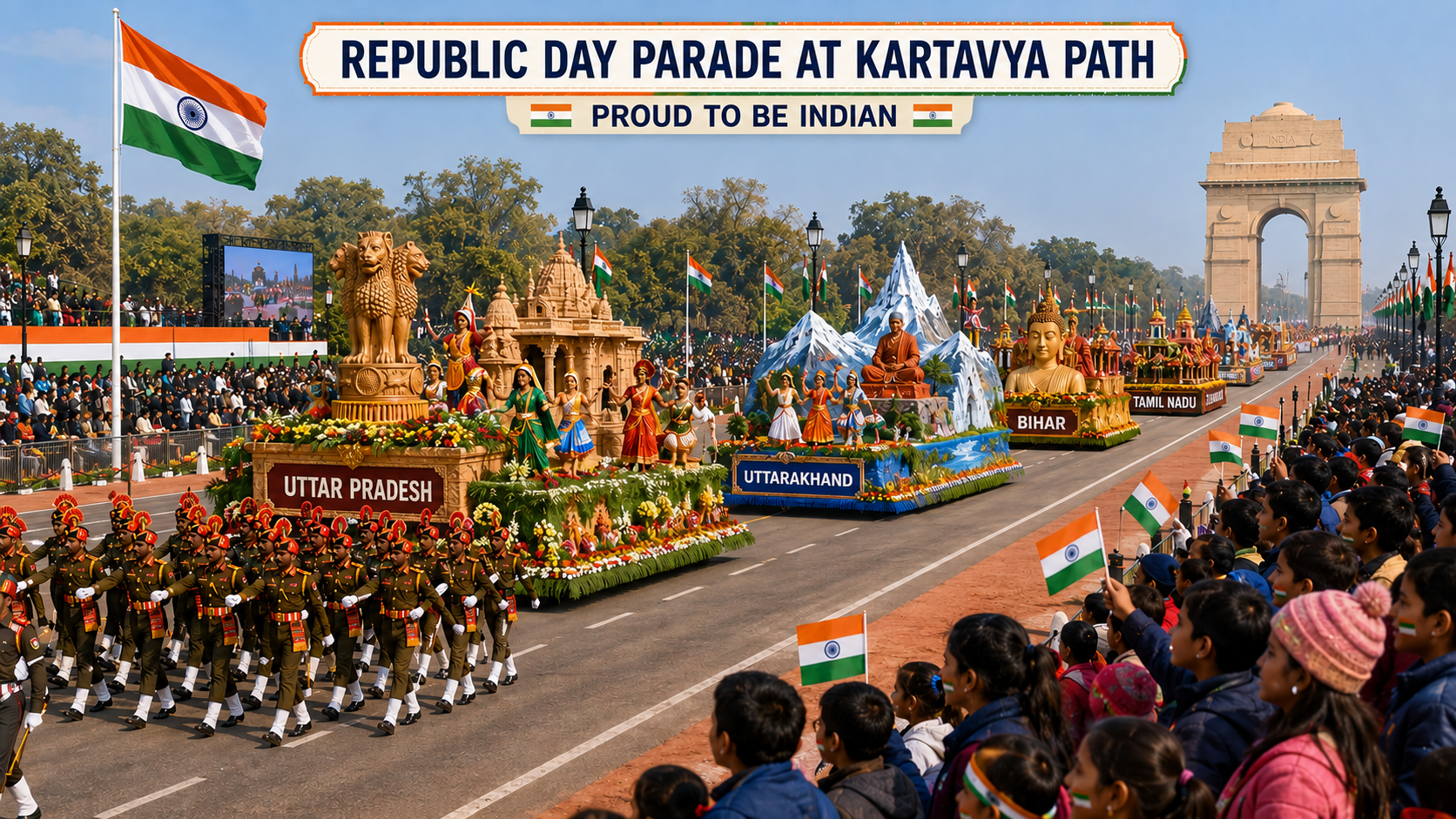
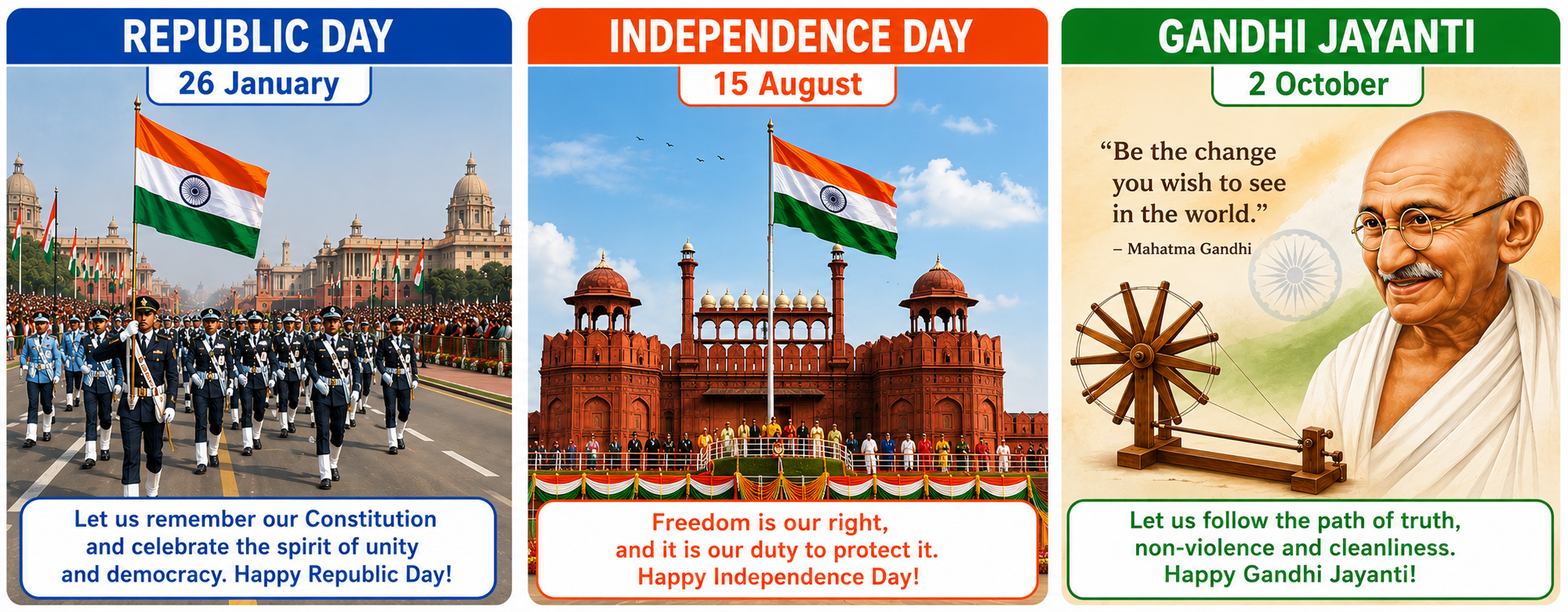
| 🇮🇳 Republic Day | 26 January | India's Constitution came into effect on this day in 1950. India became a republic. | Grand parade in Delhi, flag hoisting, cultural programmes in schools |
| 🇮🇳 Independence Day | 15 August | India got freedom from British rule on this day in 1947. | PM hoists flag at Red Fort, patriotic songs, sweets distribution in schools |
| 🇮🇳 Gandhi Jayanti | 2 October | Birthday of Mahatma Gandhi, Father of the Nation. | Prayer meetings, cleanliness drives, remembering Gandhiji's teachings of truth and non-violence |
Religious Festivals of India
India has people of many religions — Hindu, Muslim, Christian, Sikh, Buddhist, and more. Each religion has its own beautiful festivals. The best part? People of all religions often celebrate each other's festivals too!
| Festival | Religion | When | Why We Celebrate | How We Celebrate |
|---|---|---|---|---|
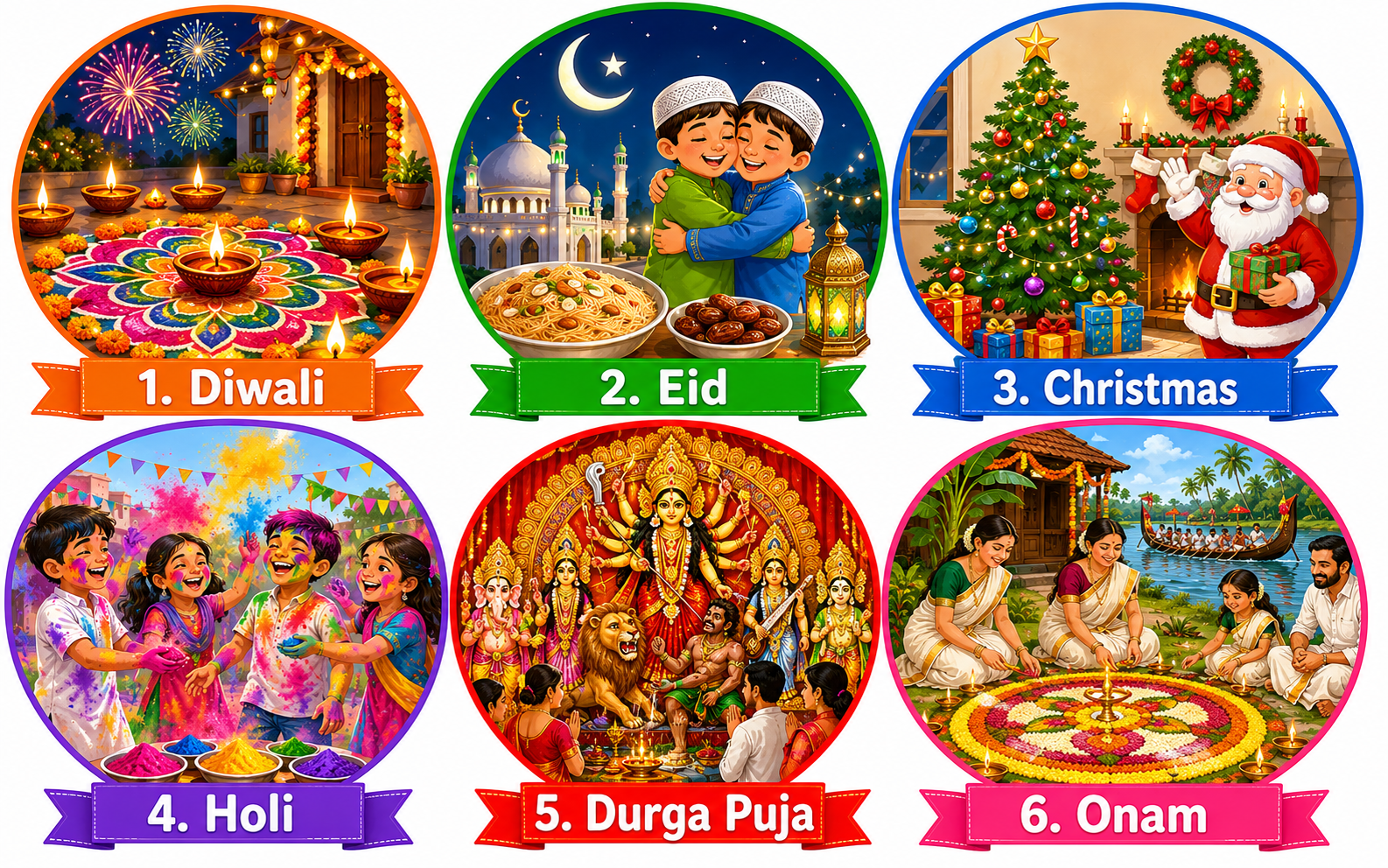
| 🪔 Diwali | Hindu | October / November | Victory of light over darkness; Lord Rama returned to Ayodhya | Light diyas and candles, burst crackers, make rangoli, eat sweets, worship Lakshmi |
| 🌙 Eid-ul-Fitr | Muslim | After Ramadan | End of the holy month of fasting (Ramadan) | Offer namaz, wear new clothes, eat seviyan (vermicelli), give gifts, hug and greet everyone |
| 🎄 Christmas | Christian | 25 December | Birthday of Jesus Christ | Decorate Christmas tree, exchange gifts, sing carols, go to church, eat cake and plum pudding |
| 🎨 Holi | Hindu | March | Victory of good over evil (Prahlad and Holika); arrival of spring | Play with colours and water, eat gujiya, sing and dance, forgive enemies |
| 🙏 Durga Puja | Hindu | October | Goddess Durga's victory over demon Mahishasura | Pandal decorations, idol worship for 5 days, dhunuchi dance, immersion (visarjan) |
| 🍚 Pongal | Hindu | January (Tamil Nadu) | Thanking the Sun God and nature for good harvest | Cook Pongal rice in new pot, decorate with kolam, thank cows and bulls |
| 🌾 Baisakhi | Sikh | 13/14 April (Punjab) | Sikh New Year; harvest festival; formation of Khalsa | Visit Gurudwara, do bhangra dance, eat langar, celebrate harvest |
| 🛶 Onam | Hindu | August/September (Kerala) | Homecoming of King Mahabali; harvest celebration | Pookalam (flower carpet), Onam Sadya feast, boat races, Kathakali dance |
| 🔥 Lohri | Hindu/Sikh | 13 January (Punjab) | End of winter; bonfire festival before harvest | Light bonfire, throw peanuts and popcorn, sing and dance around fire |
Harvest Festivals
Harvest festivals are celebrated to thank nature and God for a good crop. Farmers work very hard, and when the crops are ready, they celebrate with joy!
Different states in India have different harvest festivals:
| Festival | State | Season | Special Feature |
|---|---|---|---|
| Pongal | Tamil Nadu | January (winter harvest) | Rice cooked in new pot; kolam designs; thanking Sun and cattle |
| Baisakhi | Punjab | April (wheat harvest) | Bhangra dance; new year for farmers; langar at Gurudwara |
| Onam | Kerala | August/September | Pookalam; Onam Sadya (grand feast); boat races |
| Lohri | Punjab, Haryana | January (before harvest) | Bonfire; peanuts, rewri, popcorn; songs and dance |
| Bihu | Assam | April (spring harvest) | Bihu dance; pitha (rice cakes); new clothes |
| Makar Sankranti | Many states | 14 January | Kite flying; til-gul sweets; holy river bath |
How Festivals Bring People Together
Festivals are not just about one family — they bring the whole community together!
- Family reunions: Family members who live far away come home to celebrate together.
- Sharing food: People share sweets, snacks, and meals with neighbours and friends.
- Community events: Melas (fairs), cultural programmes, and group prayers bring everyone together.
- Helping others: Many people donate food, clothes, and money to the poor during festivals.
- Forgetting differences: During festivals, people forget their fights and greet each other with love.
- Learning culture: Children learn about traditions, stories, and values from elders during festivals.
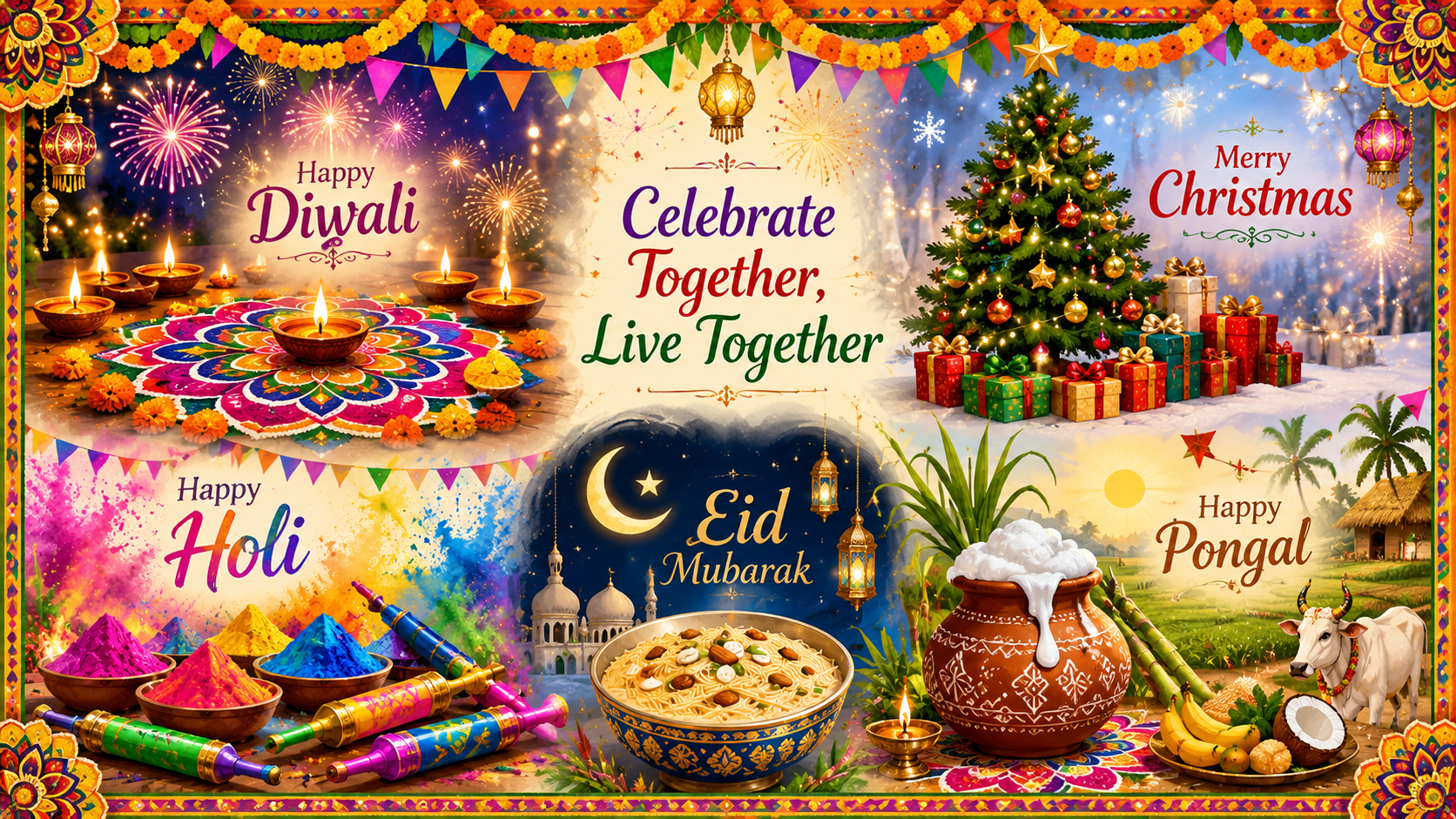
During Eid, Muslims invite Hindu neighbours to share seviyan. During Diwali, Hindu families share sweets with Muslim and Christian friends. During Christmas, everyone enjoys the cake! This is the beauty of India — "Unity in Diversity."
Festivals and Food, Clothes & Decorations
Every festival has its own special food, clothes, and decorations that make it unique and colourful!
🍽️ Festival Foods
| Festival | Special Food |
|---|---|
| Diwali | Laddoo, barfi, kaju katli, namkeen |
| Eid | Seviyan (vermicelli), biryani, sheer khurma |
| Christmas | Cake, plum pudding, cookies |
| Holi | Gujiya, thandai, malpua |
| Pongal | Sweet Pongal rice, sugarcane |
| Lohri | Rewri, gajak, peanuts, popcorn |
| Onam | Onam Sadya (26-dish feast on banana leaf) |
| Baisakhi | Makki di roti, sarson da saag, kheer |
👗 Festival Clothes
| Festival | What People Wear |
|---|---|
| Diwali | New colourful clothes — sarees, kurta-pyjama, lehenga |
| Eid | New clothes — sherwani, salwar kameez, topi (cap) |
| Holi | Old white clothes (that can get coloured!) |
| Baisakhi | Bright Punjabi suits, turbans, phulkari dupatta |
| Onam | White and gold Kerala saree (kasavu), mundu |
| Republic Day | Tricolour accessories, white clothes |
🎊 Festival Decorations
| Festival | Decorations |
|---|---|
| Diwali | Diyas, candles, rangoli, fairy lights, torans (door hangings) |
| Christmas | Christmas tree, stars, bells, stockings, wreaths |
| Durga Puja | Pandals (decorated stages), lights, flowers, idol decoration |
| Onam | Pookalam (flower carpet at doorstep) |
| Republic Day | Tricolour flags, banners, balloons |
| Eid | Lights, moon and star decorations, new curtains |
Key Words
| Word | Meaning |
|---|---|
| Festival | A special day of celebration and joy |
| National festival | A festival celebrated by all citizens of the country |
| Republic | A country where people choose their own leaders |
| Independence | Freedom from the rule of another country |
| Harvest | The time when crops are gathered from the fields |
| Tradition | Customs and beliefs passed down from elders |
| Culture | The way of life, food, clothes, and beliefs of a group of people |
| Unity in Diversity | People of different religions and cultures living together in harmony |
- A festival is a special day of celebration, joy, and togetherness.
- India has three national festivals: Republic Day (26 Jan), Independence Day (15 Aug), Gandhi Jayanti (2 Oct).
- National festivals are celebrated by all Indians regardless of religion.
- Religious festivals include Diwali, Eid, Christmas, Holi, Durga Puja, Pongal, Baisakhi, Onam, and Lohri.
- Harvest festivals thank nature for good crops — Pongal, Baisakhi, Onam, Lohri, Bihu, Makar Sankranti.
- Festivals bring people together through food, music, dance, and shared celebrations.
- Each festival has its own special food, clothes, and decorations.
- India is called the "Land of Festivals" — we celebrate unity in diversity.
Practice Questions
| Column A | Column B |
|---|---|
| 1. Diwali | a. Colours and water |
| 2. Holi | b. Diyas and rangoli |
| 3. Eid | c. Christmas tree and carols |
| 4. Christmas | d. Bonfire and peanuts |
| 5. Lohri | e. Seviyan and namaz |
Activity 1: My Favourite Festival
Write about your favourite festival. What do you eat? What do you wear? How do you decorate your home?
Activity 2: Festival Calendar
Fill in this table with festivals your family celebrates:
| Month | Festival | What We Do |
|---|---|---|
| January | ||
| March | ||
| August | ||
| October/November | ||
| December |
Want a printable worksheet? Switch to the Worksheet View, then print.