Freedom Fighters of India
Learning Objectives
- I can explain what freedom and independence mean.
- I can tell why India needed freedom from British rule.
- I can name at least 8 important freedom fighters and their contributions.
- I can describe the Salt March, Quit India Movement, and Non-Cooperation Movement.
- I can tell when and how India got independence.
- I can explain the values of non-violence, bravery, and unity shown by our freedom fighters.
What is Freedom?
Freedom means being able to live your life the way you want. It means making your own rules, choosing your own leaders, and not being controlled by others.
Independence means a country is free to govern itself. The people of that country make their own laws and decisions.
Today, India is a free country. But long ago, India was ruled by the British (people from England). They ruled India for nearly 200 years! Our brave freedom fighters fought hard to make India free.
Why Did India Need Freedom?
The British came to India as traders (East India Company) but slowly took over the whole country. Under British rule:
- Indians were treated badly in their own country.
- Indian farmers were forced to grow crops for the British, not for themselves.
- Heavy taxes were collected from poor Indians.
- Indians were not allowed to hold important jobs or make their own laws.
- Indian goods and wealth were taken to England.
- Indians had no right to speak freely or protest.
Major Freedom Fighters of India
1. Mahatma Gandhi (1869–1948)
Father of the Nation | Full name: Mohandas Karamchand Gandhi
- He believed in non-violence (Ahimsa) — fighting without weapons, only with truth and peace.
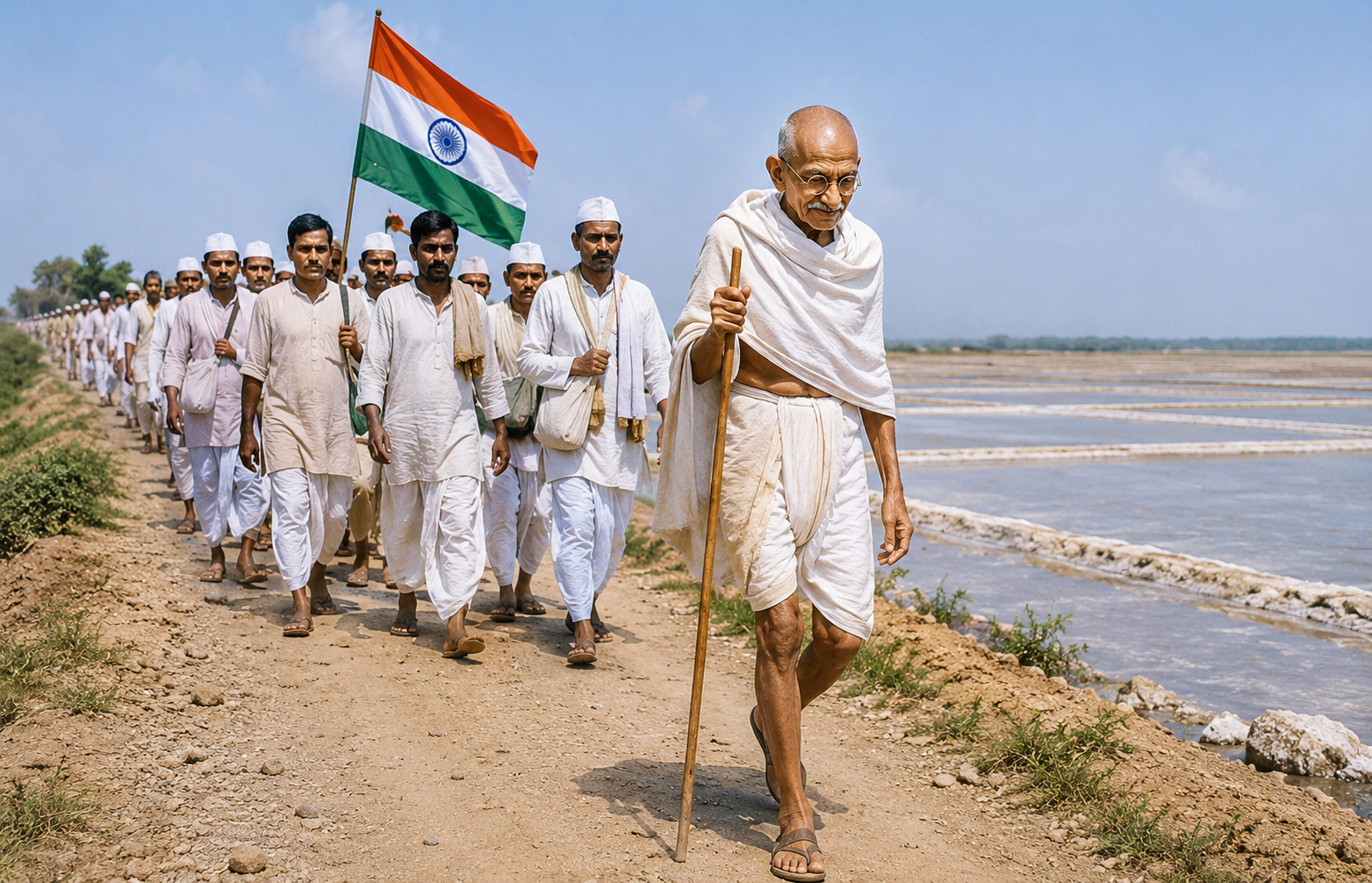
- He led the Salt March (Dandi March) in 1930 — walked 385 km to make salt and break the unfair British salt law.
- He started the Quit India Movement in 1942 — told the British "Leave India!"
- He started the Non-Cooperation Movement — asked Indians to stop buying British goods.
- He wore simple khadi clothes and lived a simple life.
- Famous words: "Be the change you wish to see in the world."
2. Jawaharlal Nehru (1889–1964)
First Prime Minister of India | Known as Chacha Nehru (Children's Friend)
- He loved children very much. His birthday (14 November) is celebrated as Children's Day.
- He always wore a red rose on his jacket.
- He spent many years in jail fighting for India's freedom.
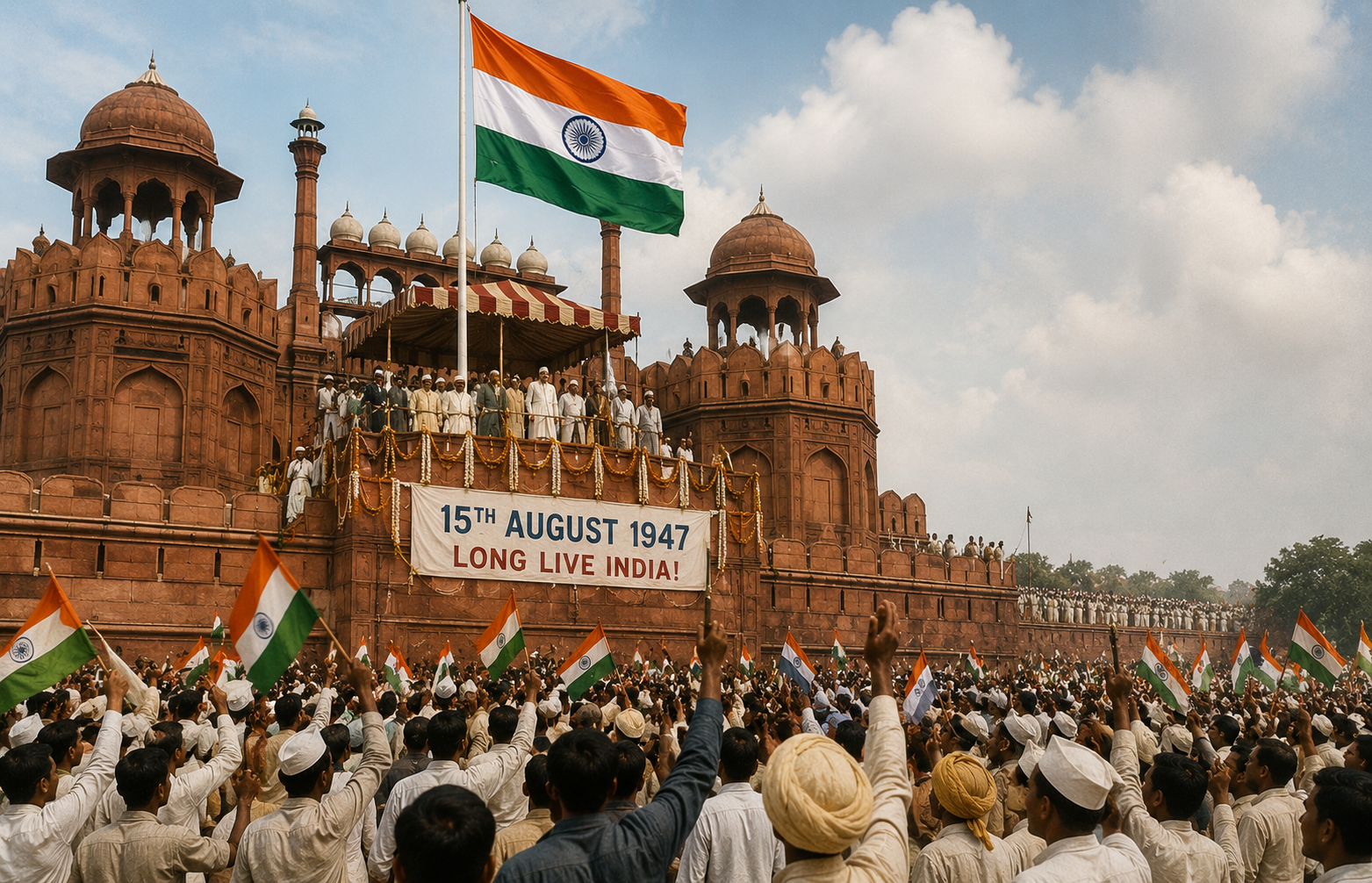
- He raised the Indian flag on 15 August 1947 at the Red Fort, Delhi.
- He dreamed of a modern, scientific India with good schools and factories.
3. Subhas Chandra Bose (1897–1945)
Netaji (Respected Leader)
- He formed the Indian National Army (INA) — also called Azad Hind Fauj.
- His famous slogan: "Give me blood, and I shall give you freedom!"
- He also gave the slogan "Jai Hind!" (Victory to India).
- He believed India needed a strong army to fight the British.
- He escaped from India in secret to gather support from other countries.
4. Bhagat Singh (1907–1931)
The Young Revolutionary
- He was only 23 years old when he gave his life for India.
- He was very brave and fearless from a young age.
- He wanted to shake the British government and show them that Indians would not stay quiet.
- He is remembered as one of the youngest and bravest freedom fighters.
- His sacrifice inspired millions of Indians to join the freedom struggle.
5. Rani Laxmibai (1828–1858)
The Brave Queen of Jhansi
- She was the queen of Jhansi (a city in Uttar Pradesh).
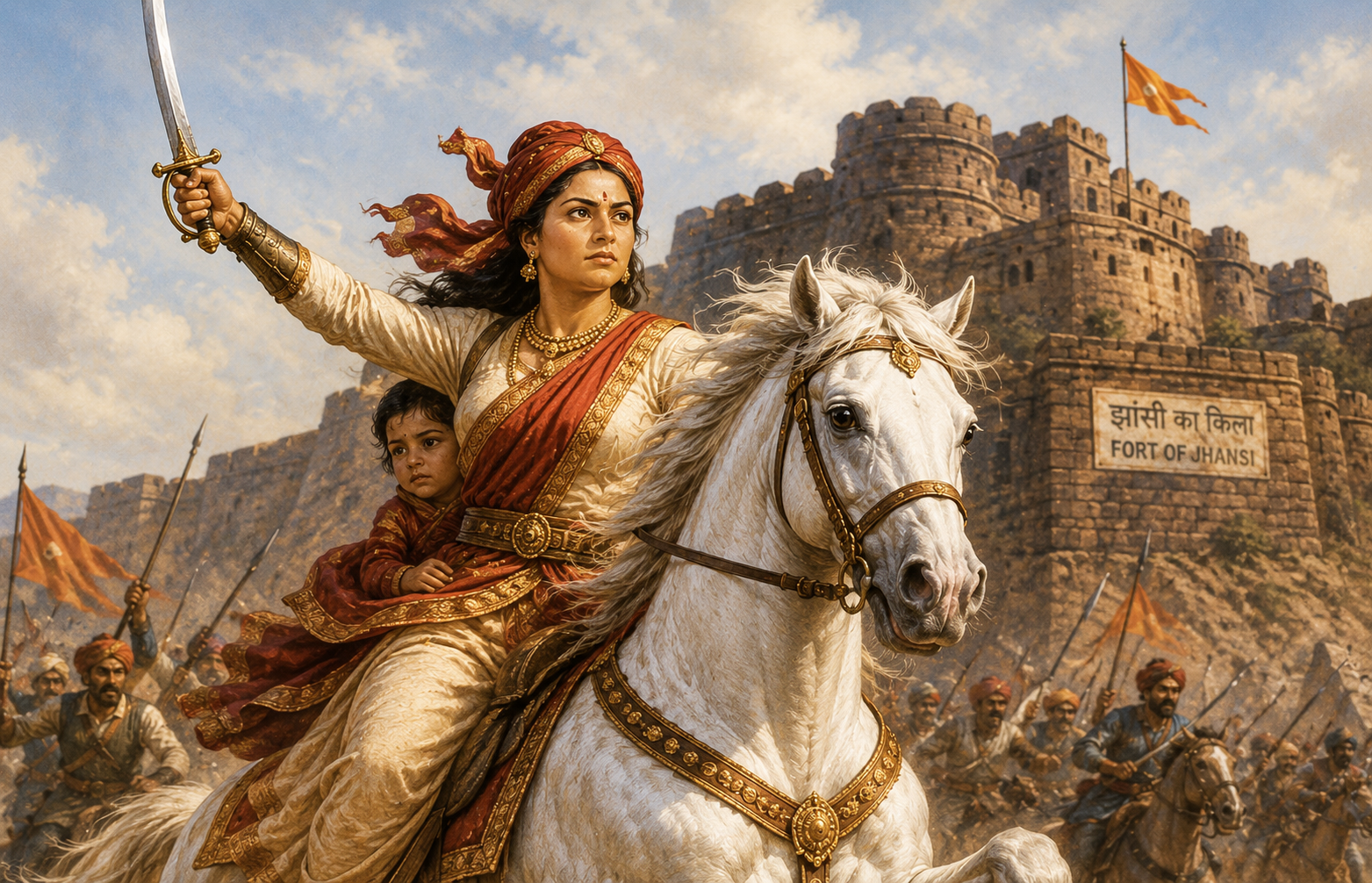
- When the British tried to take her kingdom, she fought bravely on a horse with a sword.
- She fought in the Revolt of 1857 — India's first big fight against the British.
- She tied her baby on her back and rode into battle!
- Famous line about her: "Khoob ladi mardani, woh toh Jhansi wali Rani thi" (She fought like a warrior, the Queen of Jhansi).
6. Sardar Vallabhbhai Patel (1875–1950)
The Iron Man of India
- After independence, India had over 500 small kingdoms (princely states).
- Sardar Patel united all these states into one India.
- Without him, India would have been many small countries, not one big nation.
- The world's tallest statue — Statue of Unity in Gujarat — is built in his honour.
- He is called "Sardar" which means leader/chief.
7. Dr B.R. Ambedkar (1891–1956)
Father of the Indian Constitution
- He wrote the Constitution of India — the book of rules by which our country is governed.
- He fought for the rights of poor and oppressed people.
- He believed everyone is equal — no matter their caste, religion, or background.
- He was the first Law Minister of independent India.
- His birthday (14 April) is celebrated as Ambedkar Jayanti.
8. Sarojini Naidu (1879–1949)
The Nightingale of India
- She was a great poet and wrote beautiful poems — that's why she is called the "Nightingale of India."
- She was the first Indian woman to become a state governor (Governor of Uttar Pradesh).
- She walked with Gandhiji in the Salt March.
- She gave powerful speeches that inspired people to fight for freedom.
- She showed that women are equally brave and capable.
Freedom Fighters at a Glance
| Freedom Fighter | Known As | Contribution |
|---|---|---|
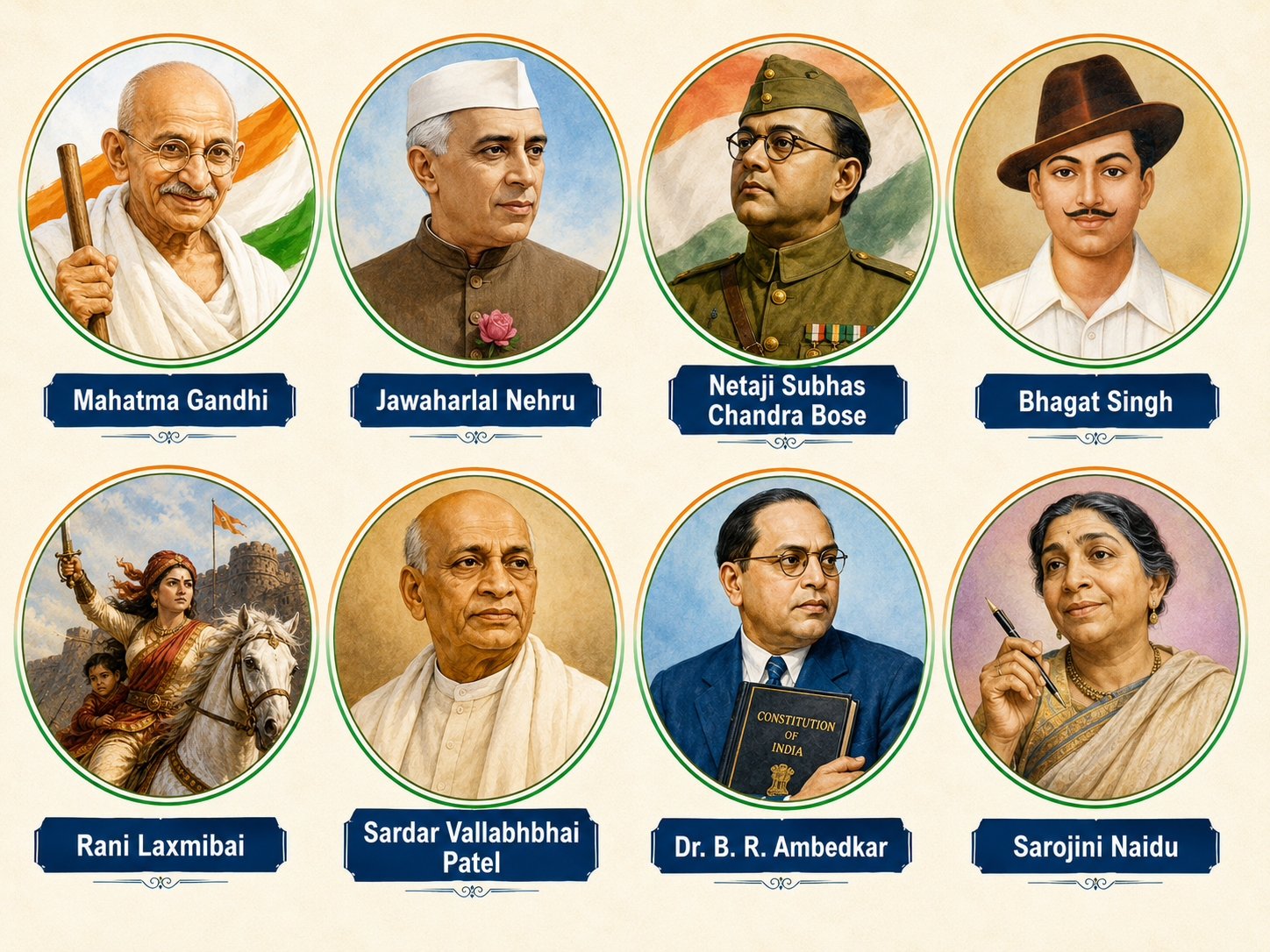
| Mahatma Gandhi | Father of the Nation | Non-violence, Salt March, Quit India |
| Jawaharlal Nehru | Chacha Nehru | First PM, loved children, modern India |
| Subhas Chandra Bose | Netaji | INA, "Give me blood", Jai Hind |
| Bhagat Singh | Young Revolutionary | Brave sacrifice at age 23 |
| Rani Laxmibai | Queen of Jhansi | Fought British in 1857 revolt |
| Sardar Patel | Iron Man of India | United 500+ states into one India |
| Dr B.R. Ambedkar | Father of Constitution | Wrote Indian Constitution, equality |
| Sarojini Naidu | Nightingale of India | Poet, first woman governor, Salt March |
Important Movements
| Movement | Year | Leader | What Happened |
|---|---|---|---|
| Non-Cooperation Movement | 1920 | Mahatma Gandhi | Indians stopped buying British goods, left British schools and courts |
| Salt March (Dandi March) | 1930 | Mahatma Gandhi | Gandhi walked 385 km to the sea to make salt, breaking the unfair British salt tax |
| Quit India Movement | 1942 | Mahatma Gandhi | Gandhi told British "Quit India!" — millions joined the protest |
How India Got Freedom
After years of struggle, sacrifices, and movements:
- The British finally agreed to leave India.
- India became independent on 15 August 1947.
- Jawaharlal Nehru became the first Prime Minister.
- The Indian flag (Tiranga) was raised at the Red Fort in Delhi.
- Every year, we celebrate Independence Day on 15 August.
- We also celebrate Republic Day on 26 January (the day our Constitution came into effect in 1950).
Key Words
| Word | Meaning |
|---|---|
| Freedom | Being able to live and make choices without being controlled by others |
| Independence | A country governing itself, making its own laws |
| Non-violence (Ahimsa) | Fighting without using weapons or hurting anyone |
| Revolution | A big change, often by fighting against unfair rulers |
| Constitution | The book of rules by which a country is governed |
| Sacrifice | Giving up something important (even life) for a cause |
| Movement | A large group of people working together for a cause |
| Patriot | A person who loves their country and works for it |
- India was ruled by the British for nearly 200 years.
- Mahatma Gandhi is the Father of the Nation — he believed in non-violence.
- Jawaharlal Nehru was India's first Prime Minister and loved children.
- Subhas Chandra Bose (Netaji) formed the INA and said "Give me blood, and I shall give you freedom!"
- Bhagat Singh was a young revolutionary who sacrificed his life at age 23.
- Rani Laxmibai fought bravely on horseback against the British in 1857.
- Sardar Patel united over 500 princely states into one India.
- Dr B.R. Ambedkar wrote the Indian Constitution.
- Sarojini Naidu was the Nightingale of India and first woman governor.
- India got independence on 15 August 1947.
Practice Questions
| Column A | Column B |
|---|---|
| 1. Mahatma Gandhi | a. Nightingale of India |
| 2. Jawaharlal Nehru | b. Iron Man of India |
| 3. Subhas Chandra Bose | c. Father of the Nation |
| 4. Sardar Patel | d. First Prime Minister |
| 5. Sarojini Naidu | e. Netaji |
Activity 1: My Favourite Freedom Fighter
Choose your favourite freedom fighter and write about them:
| Question | Your Answer |
|---|---|
| Name | |
| Known as | |
| What they did | |
| Why I admire them |
Activity 2: Draw the Indian flag (Tiranga) and colour it correctly. Write what each colour stands for.
Want a printable worksheet? Switch to the Worksheet View, then print.