My Neighbourhood
Learning Objectives
- I can describe what a neighbourhood is and name the places around my home.
- I can explain what people do at different places in the neighbourhood.
- I can name the people who help us in our neighbourhood.
- I can list ways to be a good neighbour.
- I can compare urban (city) and rural (village) neighbourhoods.
- I can explain how to keep my neighbourhood clean and safe.
Introduction
Ravi lives in a colony in Jaipur. Every morning, he walks past the kirana store, waves to the watchman, and takes an auto to school. All these places and people near his home make up his neighbourhood.
Meena lives in a village near Varanasi. She sees green fields, a pond, a small temple, and a primary school near her house. Her neighbourhood looks very different from Ravi's — but both are special!
Let us learn about the places, people, and activities in our neighbourhood.
What is a Neighbourhood?
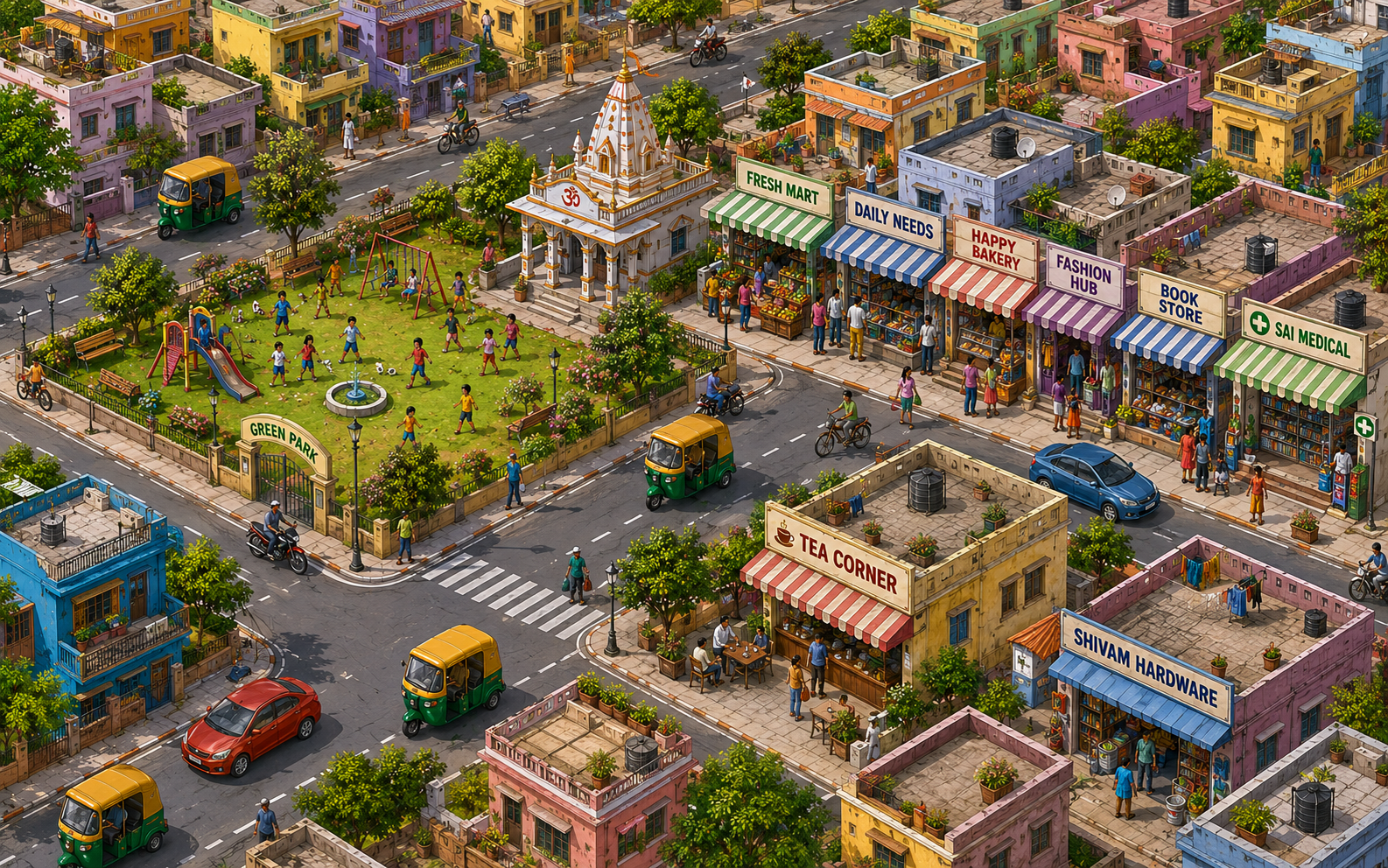
A neighbourhood is the area around our home. It includes all the places we visit and the people we meet every day. Our neighbourhood helps us get things we need — food, education, health care, and fun!
Every neighbourhood has:
- Houses and buildings where people live
- Roads and lanes to travel from one place to another
- Shops and markets to buy things we need
- Important places like schools, hospitals, and parks
- People who live and work nearby
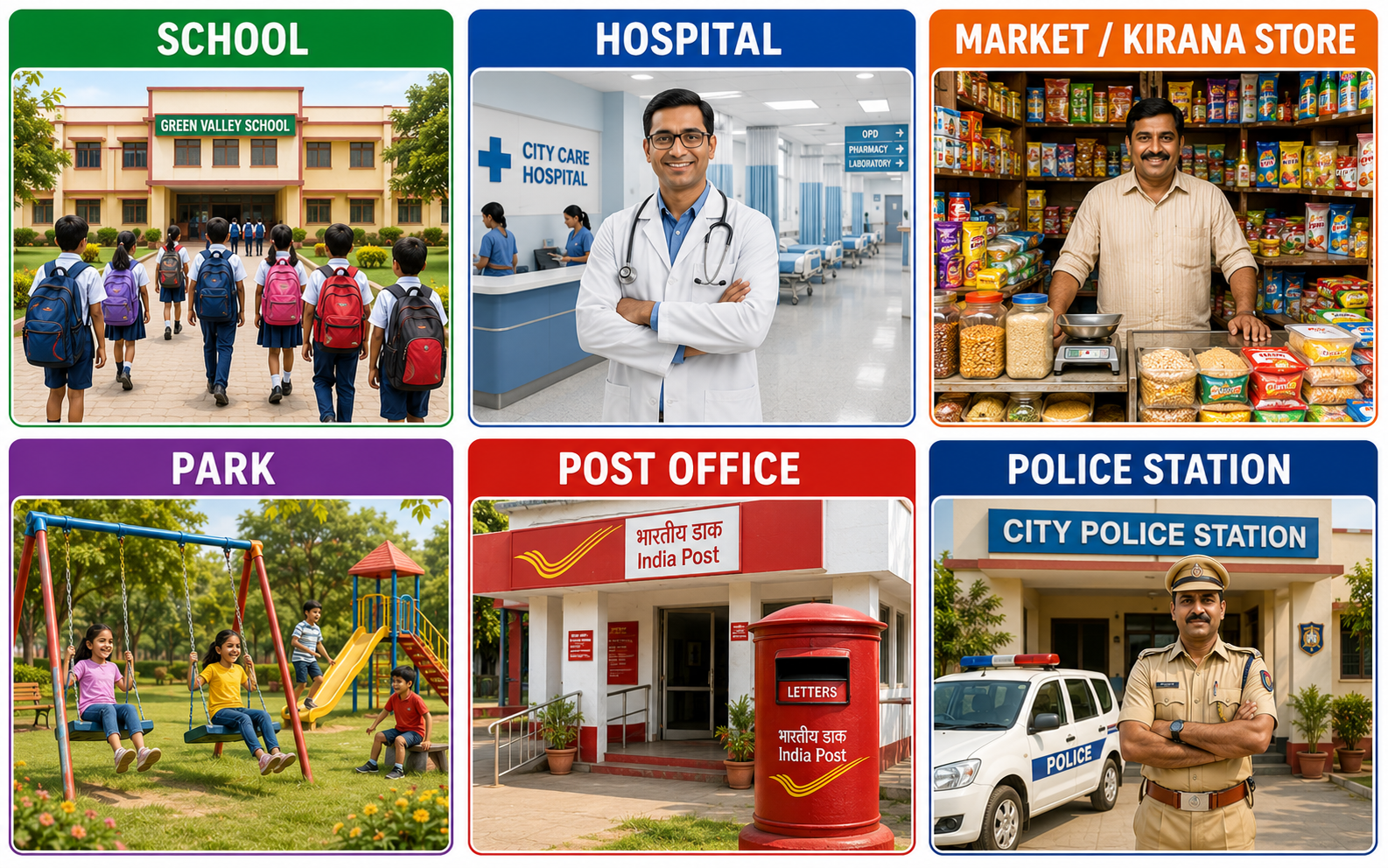
Places in Our Neighbourhood
There are many important places in our neighbourhood. Each place serves a different purpose:
| Place | What We Do There |
|---|---|
| 🏫 School | We go to learn, read, write, and play with friends. |
| 🏥 Hospital / Clinic | We go when we are sick. Doctors and nurses help us get well. |
| 🛒 Market / Shop | We buy vegetables, fruits, groceries, and daily needs from the kirana store. |
| 🌳 Park / Garden | We go to play, exercise, and enjoy fresh air. Children love swings and slides. |
| 📮 Post Office | We send and receive letters and parcels. We can also save money here. |
| 🏦 Bank | People keep their money safe, deposit and withdraw cash. |
| 🛕 Temple / Mosque / Church / Gurudwara | People go to pray and celebrate festivals together. |
| 👮 Police Station | Police officers keep us safe. We go here to report problems or get help. |
| 📚 Library | We borrow and read books. It is a quiet place for studying. |
| 🚏 Bus Stop | We wait here to catch a bus to go to school, market, or other places. |
People in Our Neighbourhood
Many people live and work in our neighbourhood. They help us in different ways:
| Person | How They Help Us |
|---|---|
| 👨👩👧 Neighbours | They live near our house. We share things, celebrate festivals together, and help each other in times of need. |
| 🧑💼 Shopkeeper | Sells us groceries, milk, bread, and other daily items. The kirana store uncle knows everyone! |
| 👮 Watchman (Guard) | Keeps our colony safe at night. He checks who comes in and goes out. |
| 🧹 Sweeper (Safai Karamchari) | Cleans our streets and lanes every morning. Keeps the neighbourhood tidy. |
| 🛺 Auto / Rickshaw Driver | Takes us from one place to another. Very helpful for going to school or market. |
Other helpers include: the milkman (doodhwala), newspaper boy, postman (dakiya), vegetable seller (sabziwala), and the chai stall owner.
How to Be a Good Neighbour
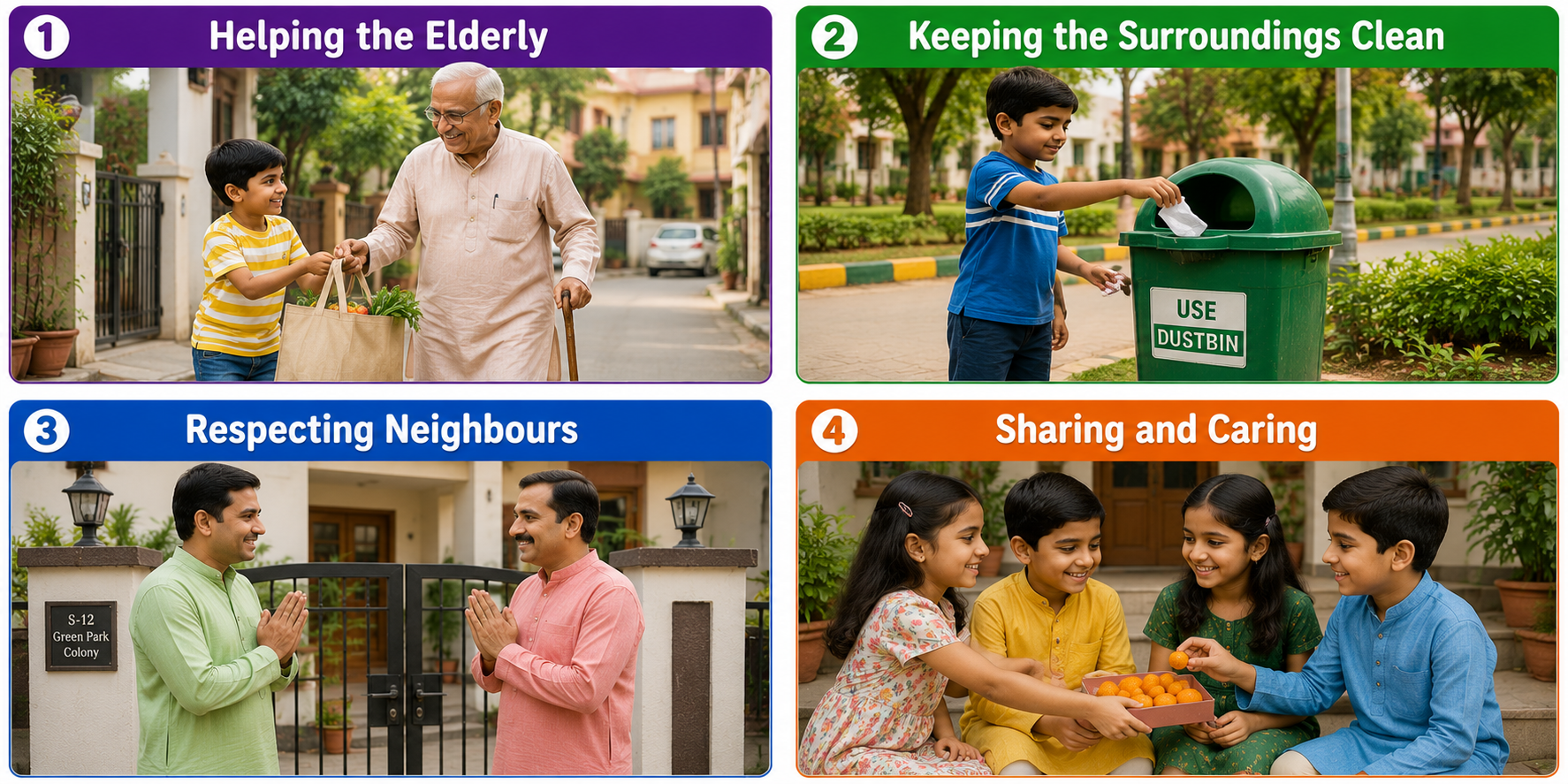
Being a good neighbour makes our neighbourhood a happy place. Here are some ways:
- Help others: Help elderly neighbours carry bags. Share food during festivals. Visit sick neighbours.
- Don't litter: Always throw garbage in the dustbin. Never throw wrappers on the road.
- Be polite: Say "Namaste" or "Good morning" to neighbours. Speak softly. Don't play loud music late at night.
- Share: Share toys, books, and food with neighbours. Lend things when asked nicely.
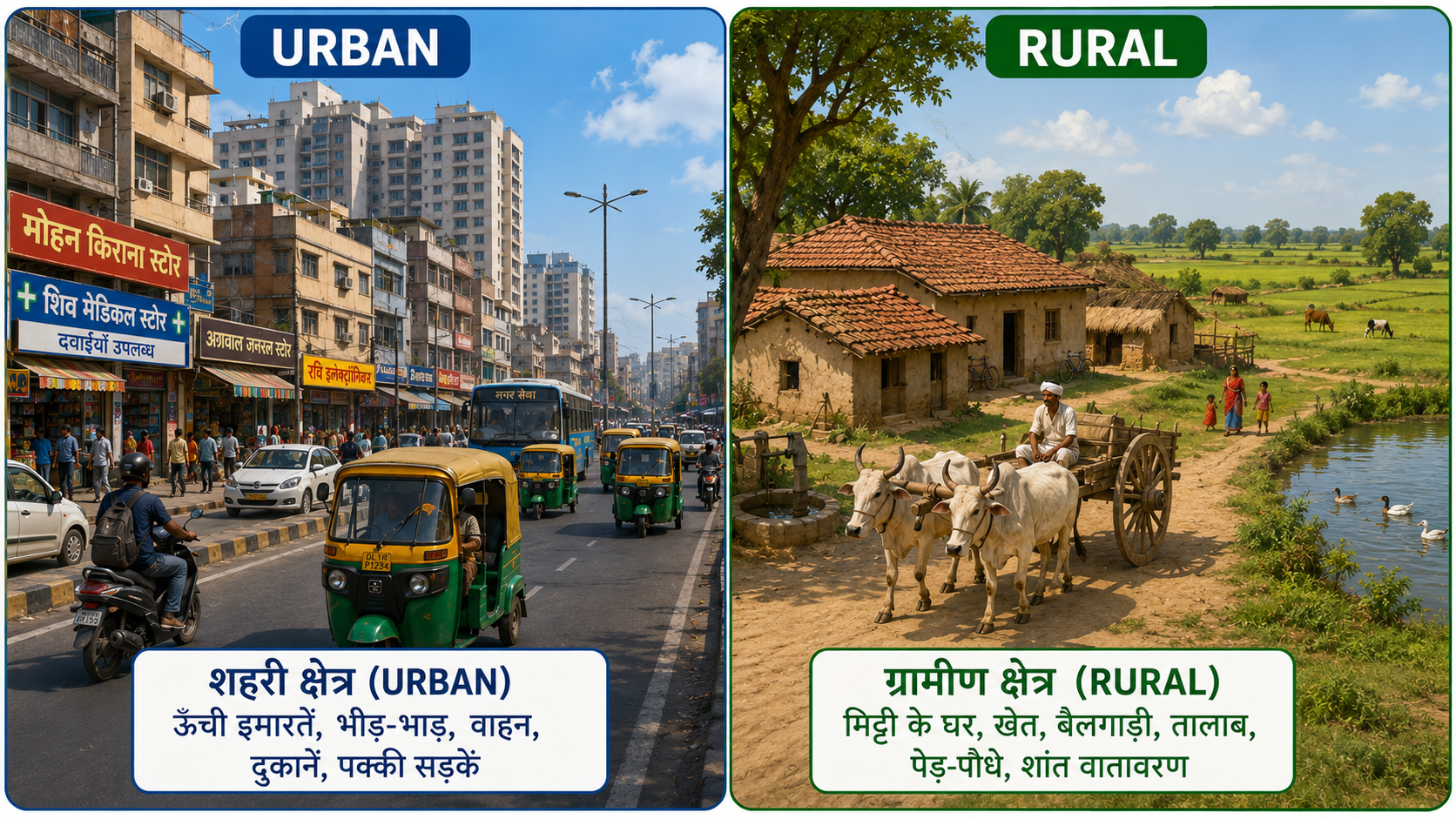
Urban vs Rural Neighbourhoods
Neighbourhoods in cities (urban) and villages (rural) look very different:
| Feature | Urban (City) Neighbourhood | Rural (Village) Neighbourhood |
|---|---|---|
| Houses | Flats, apartments, multi-storey buildings | Kutcha or pucca houses with courtyards |
| Roads | Wide, paved roads with traffic signals | Narrow lanes, some mud roads |
| Transport | Buses, autos, metro, cars | Bullock carts, bicycles, tractors |
| Shops | Malls, supermarkets, many kirana stores | Small weekly haat (market), one general store |
| Schools | Big schools with many classrooms | Small schools, sometimes one teacher for all |
| Nature | Less trees, more concrete, parks for greenery | Lots of trees, fields, ponds, fresh air |
| People | Many people, busy, fast life | Fewer people, everyone knows each other |
| Noise | Noisy — traffic, horns, construction | Quiet — birds chirping, animals |
Keeping Our Neighbourhood Clean
A clean neighbourhood is a healthy neighbourhood. Here is what we can do:
- Throw garbage only in dustbins. Separate wet waste and dry waste.
- Do not spit or urinate on roads or walls.
- Keep drains clean so water does not collect and mosquitoes do not breed.
- Plant trees and take care of plants in your lane.
- Join neighbourhood clean-up drives (Swachh Bharat Abhiyan).
- Do not burst loud crackers that cause air and noise pollution.
Key Words
| Word | Meaning |
|---|---|
| Neighbourhood | The area around our home with places and people nearby |
| Urban | Related to a city or town |
| Rural | Related to a village or countryside |
| Colony | A group of houses in a planned area |
| Kirana store | A small grocery shop that sells daily items |
| Haat | A weekly open market in villages |
| Community | A group of people living together in the same area |
| Swachh Bharat | Clean India — a government campaign to keep India clean |
| Safai Karamchari | A person who cleans streets and public places |
| Pucca house | A strong house made of bricks, cement, and concrete |
- A neighbourhood is the area around our home with places and people.
- Important places: school, hospital, market, park, post office, bank, police station, library, bus stop, place of worship.
- Neighbours, shopkeepers, watchmen, sweepers, and auto drivers help us daily.
- Good neighbours help others, don't litter, are polite, and share.
- Urban neighbourhoods have tall buildings and busy roads; rural ones have fields and open spaces.
- We must keep our neighbourhood clean by using dustbins, planting trees, and not polluting.
- Swachh Bharat Abhiyan encourages everyone to keep India clean.
Practice Questions
| Column A | Column B |
|---|---|
| 1. Hospital | a. Buy groceries |
| 2. Kirana store | b. Send letters |
| 3. Post Office | c. See a doctor |
| 4. Library | d. Keep money safe |
| 5. Bank | e. Borrow books |
Draw a simple map of your neighbourhood. Show your house in the centre and draw the places around it — school, park, shop, temple/mosque, bus stop, etc. Label each place and draw the roads connecting them.
Things to include:
- Your house (mark with a star ⭐)
- At least 5 places near your home
- Roads or lanes connecting the places
- Names of the places
Want a printable worksheet? Switch to the Worksheet View, then print.